10 tips for a city break to Thuringia
Discover the 10 hidden gems of Erfurt, Weimar and Eisenach
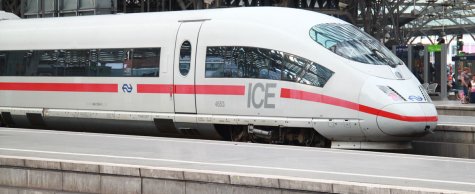
Nestled between the cities of Erfurt, Weimar and Eisenach lies one of Germany's most surprising cultural regions. Thuringia is known as the 'Green Heart of Germany', but here you will also find beautiful medieval towns, UNESCO World Heritage Sites, lively festivals and culinary cycle routes. You can travel to the region from Amsterdam Centraal Station on the ICE International train in around seven hours.
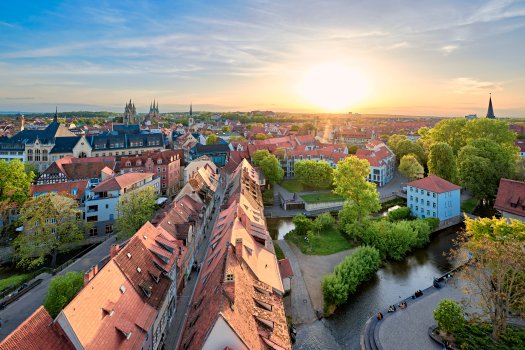
1. Erfurt: walk across Europe’s longest covered bridge
The Krämerbrücke is Erfurt's showpiece. The 32 half-timbered houses that line the bridge make it unique. Only when viewed from a distance, across the water, do you realise that this is no ordinary street, but the longest inhabited bridge in Europe! In the past, merchants used to sell their wares here, but today you will find studios and craft shops instead.

©DZT/Jens Wegener
2. Erfurt: visit a spectacular open-air theatre
In Erfurt, the city itself serves as a theatre set. During the DomStufen-Festspiele, the seventy steps of the Domberg are transformed into an impressive open-air theatre.
Looking for a more intimate setting? Then visit the medieval ruins of the Barfüßerkirche for an evening of theatre under the summer sky.

©Theater Erfurt/Lutz Edelhoff
3. Erfurt: cycle to a top-rated restaurant
If you are looking for an exclusive culinary experience near Erfurt, you will need to put in a little effort. Hire a bike from Erfurt Tourist Information and cycle ten kilometres through the picturesque countryside to the village of Alach. There, you can dine at the idyllic Magda restaurant, run by chef André Radtke. This restaurant is renowned for its surprising four-course menu, which changes every month.
Want to make it especially romantic? Then order a well-stocked picnic basket filled with local delicacies and find a charming spot in the surrounding meadows.

©Thüringer Tourismus GmbH/Isabela Pacini/CMR
4. Weimar: visit the city of the Enlightenment
In the 18th and 19th centuries, Weimar flourished as a centre of intellectual and cultural life during the Enlightenment period. Literary and musical worlds were created here by Johann Wolfgang Goethe, Friedrich Schiller, Johann Sebastian Bach and Franz Liszt that continue to fascinate to this day. Eleven historic buildings from this era form the UNESCO World Heritage Site ‘Classical Weimar’. This includes the Park an der Ilm. Take a stroll through the idyllic parkland, passing Goethe’s garden house, the Roman House, the Parkhöhle and the romantic Schaukelbrücke bridge along the way.

©Thüringer Tourismus GmbH/Gregor Lengler/CMR
5. Weimar: discover the cradle of modern architecture
In the 20th century, the architect Walter Gropius brought the artistic avant-garde to Weimar. It was here that the iconic Haus Am Horn, a model home that sparked a global revolution in architecture and design, was built in 1923. The Bauhaus movement combined colourful experimentation with sleek minimalism and everyday practicality. Although controversial at the time, this school laid the foundations for modern architecture.
During your visit to Weimar, make sure to spend an afternoon at the Bauhaus Museum or Haus Am Horn, a model house built specifically for the first major Bauhaus exhibition.

©Thüringer Tourismus GmbH/Dominik Saure
6. Weimar: add to your festival calendar
Although Weimar is a city steeped in history, its cultural calendar is thriving. In June and July, head to the open-air theatre at the open-air theatre at the E-Werk to enjoy modern interpretations of classic plays.
You should also attend the Kunstfest Weimar, which brings contemporary art to the streets. History lovers will enjoy the Weimarer Rendez-vous festival. In winter, round off your year in style amidst the Christmas lights of the Weimarer Weihnacht.

©Weimar GmbH/Thomas Müller
7. Discover the towns of Eisenach and Bad Langensalza
On the edge of the Thuringian Forest you will find Eisenach, the birthplace of Bach. Admire a remarkable record at the Johannisplatz: the narrowest half-timbered house in Germany, just 2.05 metres wide.
Combine your visit with a trip to Bad Langensalza, a spa town famous for its well-preserved town centre and beautiful gardens. For spectacular views of the surrounding green countryside, take a walk along the treetop path in the Hainich National Park, which takes you up to a height of 44 metres among the treetops.

©Thüringer Tourismus GmbH/Florian Trykowski
8. Visit Wartburg Castle
In just eleven weeks, Martin Luther translated the New Testament in the romantic Wartburg Castle. During his exile in Eisenach, he single-handedly laid the foundations for the German written language. Wartburg is listed as a UNESCO World Heritage Site and even served as inspiration for the famous Neuschwanstein Castle. Pay a visit and experience the serene calm in which Luther completed his masterpiece.

©Thüringer Tourismus GmbH/Florian Trykowski
9. Step into a fairy-tale world in the Dragon’s Gorge
Walk in the footsteps of Martin Luther on the more than a thousand kilometres of the Lutherweg that runs through the state of Thuringia. You will visit the house in Eisenach where he lived as a schoolboy, the Augustinian Monastery in Erfurt, and places where Martin Luther wrote about his findings. In Eisenach you can bury yourself in books just like Martin Luther, but those with extra energy can walk to the spectacular Drachenschlucht gorge in about an hour. Wooden boardwalks lead alongside a babbling stream through a narrow ravine, where moss and steep rock faces create a fairytale atmosphere. An ideal spot for anyone looking to truly immerse themselves in nature.

©Thüringer Tourismus GmbH/Guido Werner
10. Cycle through the green heart of Germany
The Thüringer Städtekette is a 230-kilometre long-distance cycle route that takes you past seven historic towns in Thuringia. Allow eight to ten days to complete the full journey from Eisenach to Altenburg. Short on time? Then opt for the four- to five-day classic cultural route to Jena or the three-day stage between Erfurt and Jena, where the focus is on nature and gastronomy.
Thanks to the excellent signage and frequent train connections between the towns, you can plan your own stages with complete flexibility and at your own pace.

©Thüringer Tourismus GmbH/Florian Trykowski
To Thüringia by train
From Amsterdam Centraal you can travel with the international ICE train, with one or two layovers to Erfurt, Weimar or Eisenach. It's best to buy your tickets from a station near you for the cheapest ticket. Check our itinerary planner for the route and journey times. You will arrive at your destination in no time and children 14 years and younger travel for free!
You are welcome to bring your own bicycle and enjoy some lovely rides. Tickets can be purchased over the phone.
This article was created in collaboration with the German National Tourist Board.

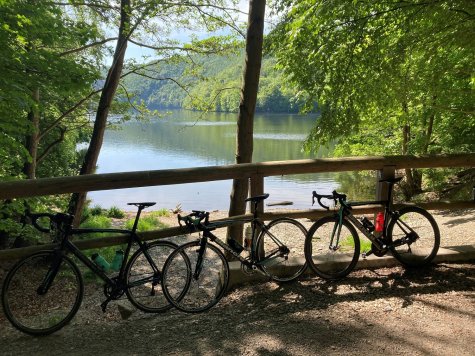
Biking in Germany
Discover 5 beautiful cycling regions in Germany. Travel in comfort by train and take your bike with you!